vacuum cleaner for garden ponds
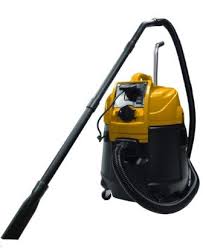
This is a continuous flow system that is easily adaptable to a variety of different situations.We can easily modify the diameter and/or the length of any part of the suction or discharge lines to meet varying needs.To use it, we simply hook the hoses up, fill the priming pot/leaf trap with water, stick the brush end in the water, turn the pump on and we are ready to go. Because it’s a continuous flow design; there are no wet/dry style reservoirs to constantly have to empty.The heart of this system is a ½ hp utility pump with a strong self-priming capability. If the pump does not say that it’s self-primping (most lower end pumps are not), it will not have a good enough suction to start the water flowing or to vacuum the heavier debris up from the pond bottom.The leaf trap strainer basket catches the big stuff and the small mucky stuff is flushed thru the pump and out to drain. If there is a lot of debris on the bottom, the basket will need to be emptied when the water flow slows down.
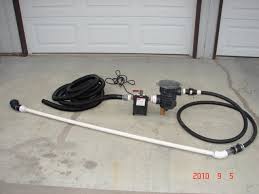
I like to install a short piece of clear plastic pipe in the suction/intake line. This allows me to see how much muck is coming up thru the piping and when it clears up.On the end of the vacuum wand, I normally use a brush from a wet/dry vacuum, but you can use anything that works for your situation. Sometimes a crevice tool or a large mesh screen will work better. The large ¼” mesh screen ballooned out at the end will help keep small fish & amphibians from getting sucked in, but it will have to be cleaned off frequently.For ponds with just loose muck & dirt on the bottom, a 1 inch diameter suction line will work well. For pond with small rocks, gravel, thick mats of plant material, algae, leaves or pine needles, a larger 1 ½ or even a 2” suction line might be needed. Once the larger debris is removed, you can go back to the lighter, easier to handle 1” line.For the discharge/waste line, you can use about anything from garden hose to cheap drainage hose to flexible or solid PVC pipe.

Just keep in mind that the less restriction there is on the discharge, the more water your pump will flow. I like to use 1 ¼ or 1 ½” diameter sump pump discharge hose from Home Depot or Lowes for larger ponds and ¾” garden hose for small ponds. This system costs about as much to build as some commercial systems, but because it’s a continuous flow system and scalable, it’s easier to use and more versatile in adapting to different pond situations.A small 4 or 6 outlet plugin strip makes a nice off/on switch. I locate mine between the pump plug and the extension cord.Remember that this system must have ground fault protection (GFCI), as should all electrical devices used around water.Click here for a detailed parts lists and assembly instructions.San Diego Pond and Garden » Pond Maintenance San Diego Pond and Garden Maintenance When it comes to pond maintenance were # 1 in San Diego Our pond maintenance fleet services the following areas. Chula Vista, Bonita, Eastlake, Coronado, So.
San Diego, Lemon Grove, La Mesa, El Cajon, Santee, Lakeside, Imperial Beach, Del Mar, Poway, National City, San Diego, San Marcos, Encinitas, Penasquitos, Bonsall, Solana Beach, La Jolla, Pacific Beach, Point Loma, Oceanside, Carlsbad, Vista, Rancho Santa Fe, Olivenhain, Ramona, Carmel Valley, Escondido, Rancho Bernardo, Cardiff, Alpine, Mira Mesa, Santa Luz, Bay Park, Blossom Valley, Clairemont, Fallbrook We specialize in regular cleaning, maintenance and servicing of ponds.
how much kirby vacuum cleanerWe are able to perform the following services to assist you in maintaining a healthy and beautiful water feature:
aeg vacuum cleaner price Pond Maintenance and Contracts
automatic vacuum cleaner new zealand
If you want to enjoy your pond or water garden with the minimum amount of work we recommend a regular service plan, this work can be carried out at intervals to suit you or your requirements. Our standard pond maintenance consists of the following: Other Services Offered By SDPG: Oase BioSmart 10000 Gravity Filter Pond Logic PondAir 2 Aeration Kit Since 1917, we've been pleased to deliver serenity to our customers. Our knowledgeable, caring staff, tested "tried and true" water gardening products; waterlilies, lotus, and bog plants freshly picked just for you and timely service are why we are "The Source for Water Gardening". Lilypons is here to help you every step of the way and we stand behind our products and advice - guaranteeing your success.Frequently Asked Pond Water Quality Questions Q. How do I prevent sludge from building up? There are a number of ways to prevent and reduce sludge build-up. How does sludge form? Sludge is a combination of organic debris and inorganic debris that accumulates on the pond bottom.

Dirt, fish waste, leaves, pollen, etc. enter and settle at the pond bottom. Soil can come out of planters and contribute to sludge buildup. Algae can die, clump and settle on the pond bottom. How do I physically remove sludge? A fine mesh net can be used to scoop the sludge from pond bottom. Sludge is rich in nutrients and may be used as fertilizer on plants in other parts of your garden. Note: Netting or scooping the sludge off the bottom is easier if you do not line the bottom of your pond with rocks and gravel. Pond vacuums can be used also. These work with gravel bottom ponds and smooth bottom ponds. How to manage sludge build-up with enzyme products? There are a number of enzyme and bacteria products that break down organic debris on the pond bottom. TetraPond® Sludge Reducer is well suited for this task. Note: These products work only to reduce organic debris. You still may need to scoop out the sludge formed by non-organic debris. Q. How do I keep my pond green free?
It’s the number one complaint of pond keepers: algae. In addition to other non-life-threatening challenges, algae obscure colorful fish and deplete valuable oxygen. With a few simple steps, you can stop seeing green and start seeing the beauty of your water garden. Adding plants: In a natural setting, fish produce nutrients that are absorbed by plants, leaving very little for algae. Increase the number of oxygenating plants on the surface of the pond. Floating plants, such as lilies and lotus, provide shade and reduce direct sunlight to control algae growth. Add submerged plants that release oxygen to the water, such as anacharis and parrot’s feather. As a guide, one bunch of six to seven strands of oxygenating plant can be added to every two square feet of water surface. Water treatments added to the pond water are an excellent option where algae problems already exist. TetraPond® AlgaeControl™ - Highly effective at combating green water, string algae and blanket weed.

TetraPond® Barley & Peat Extract – Naturally clears pond water. TetraPond® Sludge Reducer - Naturally clears pond water. TetraPond® Water Clarifier - Works fast, quickly clumps contaminants so they can be easily removed by filtration, wet vacuuming or a fine mesh net. Ultraviolet (UV) Clarifiers: TetraPond GreenFree™ UV Clarifiers combat green water by exposing suspended single-celled algae to very high levels of ultraviolet light, which destroys its reproductive ability. Q. How do I get rid of the green string algae on my waterfall rocks? String algae adheres to and grows on rocks, plants and waterfalls, and most pond owners consider this unsightly. Fortunately, TetraPond® AlgaeControl™ is effective against both green water algae and the growth of string algae. Use only as directed. Prior to using AlgaeControl™, remove as much of the string algae as you can with a sharp stream from a garden hose nozzle and stiff brush. Remove string algae from pond with net or hands.

String algae is rich in nutrients and can be used as fertilizer, or as a way to help retain ground moisture around plants in other areas of your garden during dry weather. Note: UV clarifiers are very effective against green water algae but do not control the growth of string algae. Q. Why does Barley & Peat extract make my water dark? The peat extract adds a slight tint to the water, which disrupts the light spectrum passing through the water. Q. Should I do water changes? Partial water changes are a great way to improve water quality and clarity. Here are some things to keep in mind: Avoid replacing more than 30% of the pond water at any given time. Always treat the tap water you add to the pond for chlorine, chloramines and heavy metals using a product such as TetraPond AquaSafe®. Some reasons to do partial water changes: Early in the spring, the water may be discolored from leaves that may have blown into the pond over the winter. A partial water change may help clear up the water.

If the water is excessively green due to algae blooms, a partial water change may help clear up the water. If testing of the water reveals a dangerous level of ammonia, nitrate or nitrates, water changes may prevent fish loss from the toxins. Note: Excessive levels may also be a sign of overstocking of the pond, overfeeding, inadequate bio-filtration, or too few plants. Water changes are only a short-term fix and should not be relied upon as a total solution to water quality issues. Q. Do I need to treat my pond when adding tap water?Most municipal water companies add chlorine and chloramines to protect against bacteria. Unfortunately, these chemicals are harmful to pond fish. Any time you add tap water to the pond, you should also add a water treatment such as TetraPond AquaSafe®. AquaSafe® makes tap water safe by neutralizing chlorine, chloramines and heavy metals as well as providing a protective colloid coating for fish (also known as a “slime coat”).
Q. Where do I get water to fill a pond? You may use municipal tap water, well water or rainwater.AquaSafe® makes tap water safe by neutralizing chlorine and chloramines found in municipal tap water. AquaSafe® will also neutralize heavy metals that may be in your well water and add protective colloid coating for fish regardless of the water source being used. Q. What should I do when my water is cloudy? Cloudiness (also known as turbidity) is caused by dirt, algae and other particles that are suspended in the pond water. Some particles are so fine that they pass through many pond filters. TetraPond Water Clarifier is a liquid flocculent that clumps suspended fine particles in the water into larger particles. These larger particles are trapped by filtration or fall to the bottom of the pond to be removed by net or pond vacuum. Water hardness, dust, air borne pollutants, animal waste, animals spawning in the pond, anything that changes the surface tension of the water, can cause foaming.