vacuum cleaner science fair projects
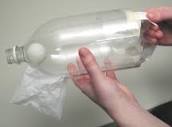
A vacuum cleaner is able to suck dirt off carpet because high pressure air from outside it flows toward low pressure air inside. In an electric vacuum, a fan causes air inside the vacuum to move quickly, which lowers the air pressure, causing suction. The higher-pressure air from outside the vacuum is sucked in to replace the low-pressure air, bringing dirt and dust with it to be caught in the filter bag. (Learn more about how vacuums work here.) In this project you can make a hand-pump vacuum cleaner that alters the air pressure inside it and creates suction using a piston instead of a fan. Follow the procedure to make your vacuum, then read the explanation of how it works! An adult will need to help with the cutting. 1. Cut the bottom of the soda bottle off about 1/3 of the way up from the base. Now cut a slit down one side of the bottom third of the bottle - this will allow you to slide it inside the top part of the bottle so it can act as a piston. 2. Cut a 6'x3' strip of paper and fold it in half lengthwise for extra strength.
Tape this strip to the bottom of the bottle to make a handle for your piston. 3. In the top part of the bottle, cut a 3/4-inch hole about 1-1/2 inches below the neck. This hole will lead to the filter bag. 4. Make a filter bag for your vacuum with a 6'x4' piece of tissue paper. Fold the paper rectangle in half and tape the sides to make a bag. Tape this over the hole you made near the neck of the bottle. 5. Tape one end of the thread to the ping-pong ball. Put the ball in the top part of the bottle. Feed the free end of the thread through the mouth of the bottle, and tape it to the outside of the bottle so the ping-pong ball hangs just slightly below the neck. How does this contraption you just made work? Push the bottom part of the bottle into the top part, then pull it back sharply. This decreases the air pressure inside the bottle, because now there is a bigger space for the same amount of air. The lower-pressure air inside the bottle creates suction, pulling in higher-pressure air from outside in through the mouth.

Now push the piston back in; this compresses the air and increases the pressure, so air flows back out of the bottle. The ping-pong ball works as a valve - when you push the piston in, it forces the ball into the neck of the bottle so that the air exits through the hole with the filter bag, rather than going out through the mouth. Now put your vacuum to work! Try sucking up bread crumbs or tiny balls of paper. When you pull the piston out, they will be sucked into the bottle, and when you push the piston in, they will be forced into the filter bag.
philips compact vacuum cleaner Experiment to find out the best way to use your bottle vacuum.
jual mesin vacuum cleanerDoes it work better to pump the piston rapidly?
vacuum cleaner bag kenmore
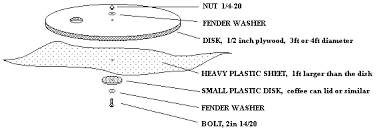
Should you pull out on the piston faster than you push in on it? Can you think of ideas to improve the design and efficiency of your vacuum? Give them a try!MAKE THE WOOD DISK Cut out your plywood disk. You can leave it square, or experiment with other shapes instead of round, but the sharp corners can hurt people. Round is best for safety. Drill a 5/16in hole in the exact center, and make sure that the 2in bolt easily passes through it. NOTE: people tell me that you can avoid using a big bolt. fasten down the small plastic disk with several short wood screws. is a big improvement! Kids sitting on the hovercraft won't get poked in the butt anymore by that big bolt sticking up. Make a hole in the plywood which exactly fits the end of your leaf blower or vacuum cleaner blower hose. This hole must be placed half way between the center of the disk and the edge, as shown below. It's a good idea to trace the hole in pencil on the wood (place the mouth of the vacuum cleaner on the wood and trace

It DOES NOT have to fit perfectly. Later you can seal any leaks with duct tape. Or just let it leak. The hose should be flush with the bottom surface (don't let it stick out or the floor will block the air flow.) MAKE THE PLASTIC SHEET Next, lay your plywood disk on the center of your large plastic sheet. Fold the edges of the sheet up over the plywood, then use the staplegun to staple it to the top of the plywood disk. Put a staple about every 4The plastic should be tight against the wood, but don't pull it TOO tight or the plastic will tear loose when inflated. you can cut off the excess plastic. If you wish, used duct tape to tape the edge of the plastic down to make it look nice. From above, it should ADD THE "SKIRT LIFTER" Poke a hole in the center of the coffee can lid. Attach it to the bottom of the hovercraft as shown below. It goes over the plastic sheet. the plastic sheet firmly against the plywood. (The coffee can lid forms

the "donut hole" when the vacuum cleaner slightly inflates the plastic CUT THE CENTER HOLES Use your razor knife to cut six vent holes in the plastic as shown below. They should be about 2in diameter. They must be placed within a few inches of the coffee can lid. Space them out so that there is plenty of plastic between each of them. But if they are too far away from the center, they will become plugged when the plastic sheet lays flat againstIf the plastic between the holes is too narrow, it will tear. If you wish, reinforce the thin necks of plastic between the holes using a couple of layers of duct tape. Flip your hovercraft over so the plastic sheet is on the bottom. on a smooth floor. Stick the vacuum cleaner hose into the hole and turn The plastic on the bottom should inflate. If it does not, lift the plywood up a bit to let the air get in and inflate the "skirt." hovercraft will lift up slightly and start gliding around.

If it doesn't work, first read the above article again to see if you Always make sure to lift the wood disk up a few inches while the blower isIf the disk stays flat against the floor, then the air can't get out of the blower, and the plastic sheet will never inflate. When you turn it on for the very first time, run it on a smooth shiney floor such as linoleum or a wooden Gym floor. Try other kinds of rough floors and rugs later, after you know it works. OK, but it makes a big cloud of dust. I've never tried it on If too much air is leaking from the around the vacuum cleaner hose, add tape at the point where the nozzle goes into the hole in the wood.Maybe your plastic sheet is too loose. hovercraft up on edge and turn on the blower. The plastic sheet should inflate, and it should lift up from the wood by only three or four inches. If the sheet is too tight then it will tear loose from the staples. if it's too loose it will form a floppy bag and won't glide around.

DON'T use a hair blow-dryer, it won't work. You need either a a lawn leaf blower or a vacuum cleaner which has a blower outlet. vacuum, remove the bag and use the blower outlet (the hovercraft needs pressure, not suction!) The air inflates the plastic which pushes upon the floor and provides aThis lifts the entire hovercraft. lid provides "strain relief" for the plastic sheet, so that the inflated plastic doesn't tear loose from the center. The coffee can lid also lifts up the plastic so air can escape through the vent holes and pressurize theThe air then leaks along the floor and out from the edges of the hovercraft. This creates an "Air Film Bearing" which has veryThe plastic isn't touching the floor. Instead it is riding on a thin layer or "film" which is made out of air. This hovercraft can support many hundreds of pounds. It works best on very smooth surfaces (linoleum, or school gym floor.) PS if you want to experiment,

maybe you could try four or five blow-dryers with their heat turned off. I know that a single blow-dryer doesn't supply enough wind, but several blow-dryers might do the job. Also, think of ways to drive yourMaybe a big fan would work. (I KNOW that a couple of CO2 fire extinquishers work well as rocket propulsion, but they're too dangerous for kids to use. PPS Where did this hovercraft idea come from? The device is called an "air film bearing" and has been used to move heavy loads on flat floors for many decades. Physics teachers used them for classroom demonstrations, and we had a compressor-driven one which lifted a granite block, back when I worked at the Museum of Science inI first saw the home-built plastic sheet version in THE PHYSICS TEACHER magazine in late 1989, called "human air hockey puck." I built one in 1990 and found that the holes in the plans didn't work right. would inflate like a beachball and fling the rider onto the floor!